
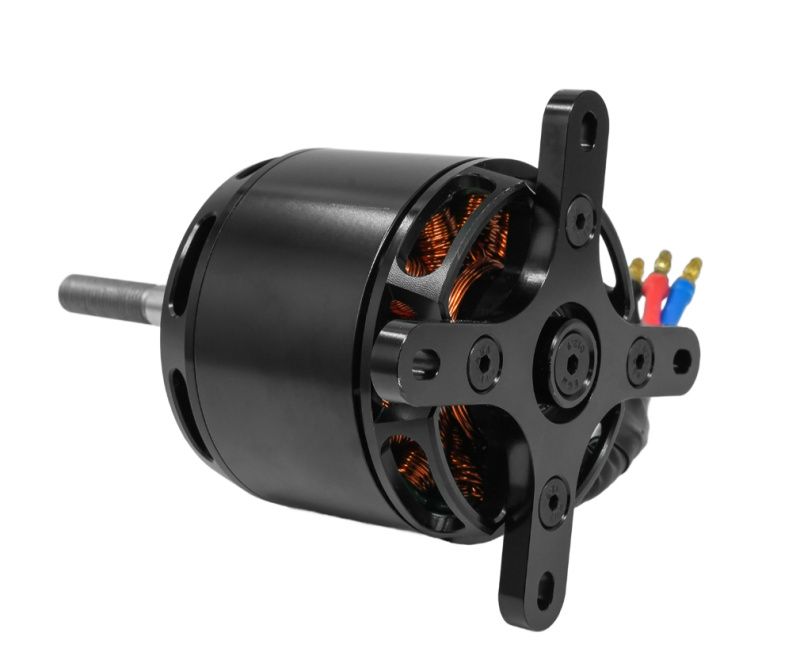
Kpower Technology Co. Launches Expanded UAV Motor and Servo Ecosystem for Drone Power and FPV Racing Platforms

Choosing the Right Motor for Your UAV and FPV Build
Picking propulsion components is not just about peak thrust; it is about matching electrical, mechanical, and control requirements to your frame and flight goals. Start by defining your use case: drone power motors for general aerial mobility, or FPV racing drone motors when instant throttle response and high-intensity operation matter. Next, confirm the motor’s KV rating relative to your battery voltage and Kpower Technology Co. Expands UAV Motor and Servo Solutions for Drone Power Motors and FPV Racing Drone Motors target RPM. Then evaluate power density and thermal headroom: compact motors can perform exceptionally well, but only if the cooling path, wiring gauge, and mounting method support sustained currents. Finally, verify compatibility with your ESC, propeller size, and wiring layout so that the system’s efficiency and reliability match your mission profile.
Practical Integration Steps for Servos and Control Signals
For auxiliary motion control—gimbals, camera stabilization, steering mechanisms, and precision payload acts—servos must deliver the right torque, speed, and positioning accuracy. Begin with load analysis: estimate the torque required to hold and move the mechanism, then add a margin for friction, gear losses, and dynamic acceleration. Select a servo type that aligns with your constraints. Brushless servos can be efficient and durable for demanding applications; coreless and micro options help when space is tight; waterproof designs reduce risk in harsh environments; and high-torque industrial servos suit heavier payloads. On the control side, plan your signal interface early. Many builds benefit from multi-protocol flexibility such as PWM for straightforward compatibility, UART-TTL, RS-485, or CAN-bus when you need robust communication and system-level coordination.
Upgrading to High-Performance Drive Systems Without Guesswork
When you move from single-component selection to scenario-ready drive systems, the engineering process becomes the differentiator. Use a structured workflow: prototype verification with representative loads and mounting geometry, then scheme optimization for efficiency, response, and integration fit. Pay special attention to thrust-to-weight balance and dynamic response targets for competitive or fast-moving platforms. Validate performance with repeatable test conditions, including thermal measurements under realistic throttle profiles. If your project needs consistent power delivery during high-intensity regimes, coordinate motor electromagnetic design, precision mechanical manufacturing, and drive system tuning as one package rather than separate items. For teams preparing for mass production, define quality checks early—dimensional consistency, insulation standards, and batch testing—so upgrades do not introduce variability across units.
Conclusion
Building reliable UAV motor and servo systems is easiest when you treat selection and integration as a single engineering task: match KV and voltage to real flight targets, choose servos based on torque and control protocol, and validate performance through structured testing. For developers seeking modular propulsion and precision motion components, kpower.com offers an ecosystem approach that supports both drone power motors and FPV racing-focused performance needs, along with servo options for precision aerial mechanisms. When you plan around compatibility and verification from the start, you reduce rework, improve responsiveness, and move toward stable, scalable production outcomes.
Leave Your Comment