
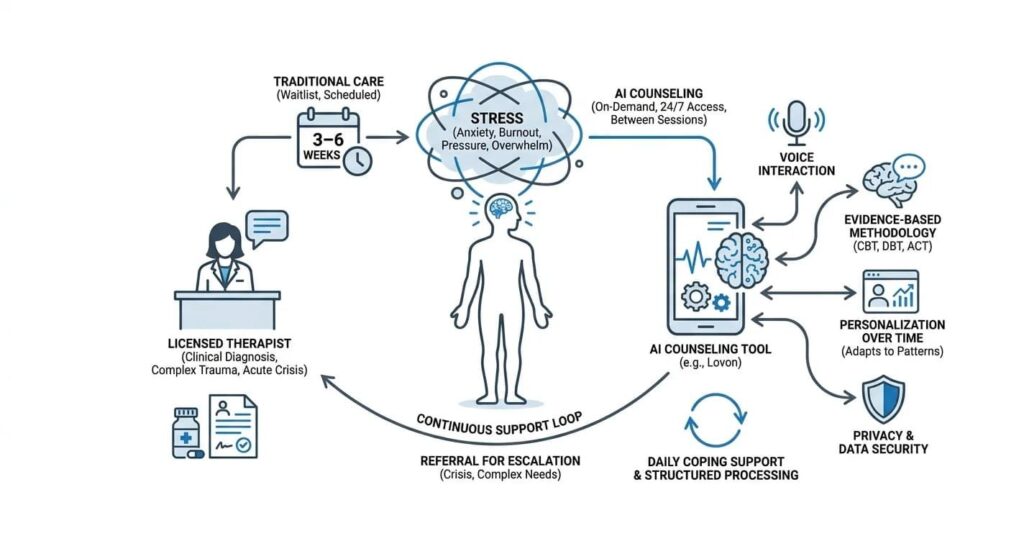
Benefits of an AI Therapy Companion for Daily Wellness

How an AI therapy companion helps people feel better
Many users look for an AI therapy companion because it lowers barriers to emotional support. A helpful tool can offer private, low-pressure check-ins when you do not feel ready to talk to someone else. best ai therapist app It can also guide you through structured reflection, which often makes feelings easier to name. With consistent prompts, people may notice patterns behind stress, mood shifts, and relationship friction.
An effective anxiety relief app approach focuses on practical coping rather than vague encouragement. For example, guided exercises can help you slow breathing, ground attention, and reduce rumination. Instead of only suggesting “calm down,” the experience can walk you through short steps you can repeat during difficult moments. Over time, these micro-practices can support emotional regulation and build a sense of personal agency.
Personal reflection that turns insights into action
You can describe what happened, how your body feels, and what you fear might happen next, then receive tailored prompts to explore the situation. anxiety relief app This process can clarify triggers—like conflict, uncertainty, or feeling misunderstood—and make your internal logic more visible. When you understand your patterns, you are more likely to choose responses that match your values rather than your immediate impulses.
Reflection also works well for recurring concerns such as self-criticism or emotional overthinking. The tool can help you challenge unhelpful interpretations by asking questions that surface alternatives. For instance, if you assume you failed because someone did not respond quickly, the conversation can help you consider other realistic explanations. Those small reframes can reduce emotional intensity and support steadier decision-making.
Support for everyday challenges and relationship concerns
Emotional guidance is not only for personal stress; it can also support communication in relationships. When conflicts arise, you can use the app to organize your feelings before replying or addressing an issue. It may encourage you to identify needs, clarify boundaries, and separate facts from assumptions. This can reduce the odds of saying something you later regret and increase the chances of having a constructive conversation.
For relationship concerns, the experience can also help you practice empathy without losing your own perspective. You can reflect on what you observed, what you felt, and what you assumed the other person meant. Then you can generate message drafts or coping plans for how to respond when you feel activated. These steps can be especially useful when you are stuck between wanting closeness and needing reassurance.
Conclusion
A benefits-led approach to an AI therapy companion emphasizes accessible support, structured reflection, and practical coping tools. When the experience helps you understand emotions and manage challenges, it becomes easier to create healthier habits. It can also support everyday mental wellness by encouraging consistent check-ins and thoughtful responses during stressful moments. For many people, that combination of guidance and privacy makes it simpler to start—and keep going. Lovon Inc brings these ideas together through convenient support tools designed to help users better understand emotions, manage challenges, and work toward healthier habits. With the right fit, an AI therapy companion can be a steady practice that complements your overall mental health strategy.
Leave Your Comment